
 English
 русский
 日本語
日本語 عربى
عربى Español
Контент
- 1 The Direct Answer: How to Keep Fruit from Clogging a Drink Dispenser
- 2 Why Fruit Clogs Drink Dispensers in the First Place
- 3 Use an Infuser Basket or Strainer Insert
- 4 Cut Fruit to the Right Size and Prepare It Properly
- 5 Pre-Infuse Your Fruit Overnight Instead of Adding It Fresh
- 6 Choosing the Right Metal Drink Dispenser Tap for Fruit-Infused Beverages
- 7 How to Clear a Clog When It Happens
- 8 Best Fruits and Combinations That Rarely Cause Clogs
- 9 Maintenance and Cleaning Practices That Prevent Repeat Clogs
- 10 Setup Tips for Events Where Multiple Refills Are Expected
- 11 Common Mistakes That Lead to Clogged Dispensers
The Direct Answer: How to Keep Fruit from Clogging a Drink Dispenser
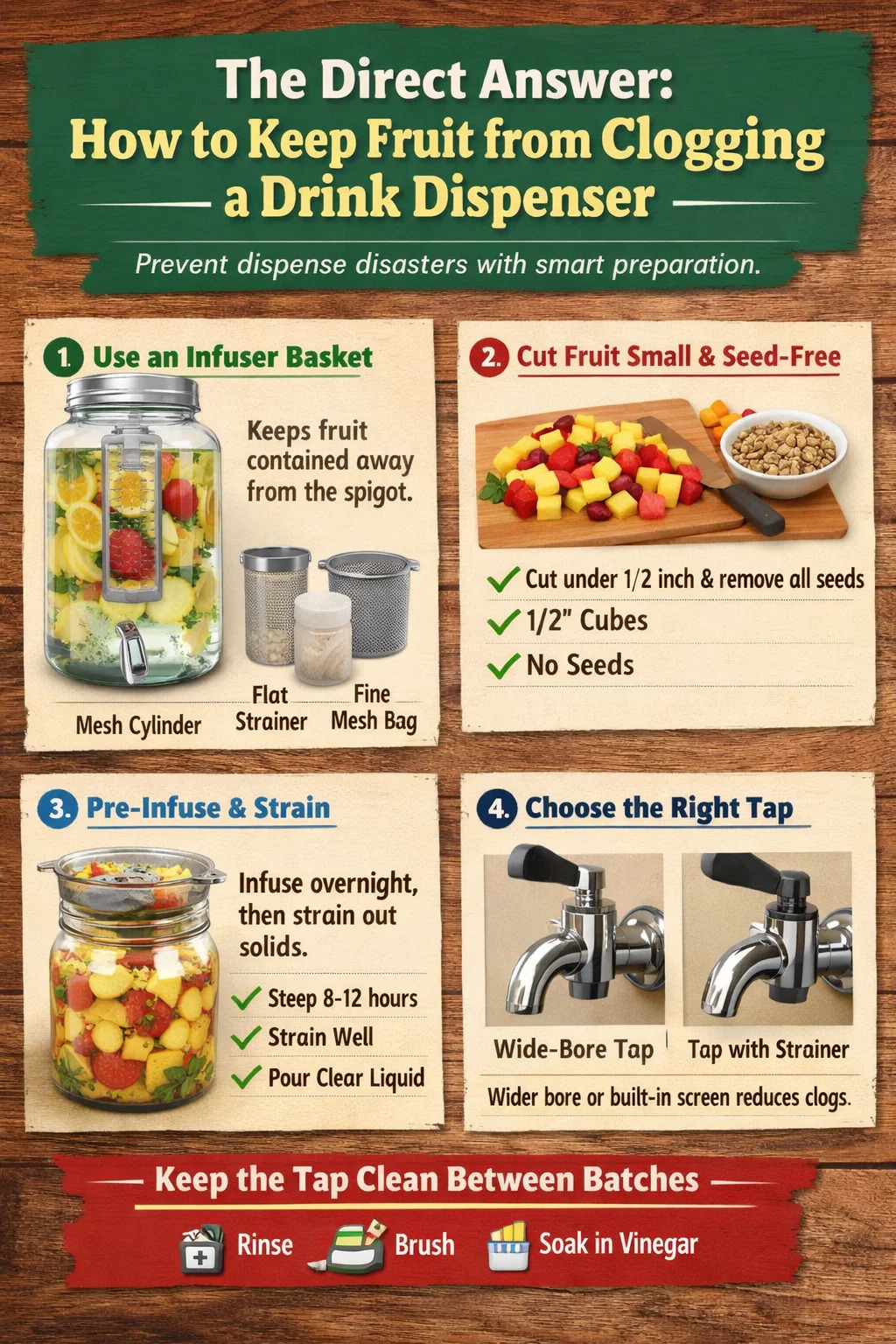
The most effective way to keep fruit from clogging a drink dispenser is to use an infuser basket, strain the liquid before filling the dispenser, and cut fruit into pieces no larger than half an inch. If you are using a Metal Drink Dispenser Tap, the spigot opening is typically between 10mm and 20mm in diameter — fruit pulp, seeds, and skin fragments can block this opening within minutes of pouring, especially in warm environments where pulp breaks down faster. Combining physical barriers with proper fruit preparation eliminates nearly all clog-related issues before they start.
This is not just about aesthetics. A blocked tap at an outdoor event, wedding, or catering setup can bring service to a complete halt. Understanding why clogs happen and how to prevent them systematically will save you time, frustration, and wasted product.
Why Fruit Clogs Drink Dispensers in the First Place
Before fixing the problem, it helps to understand the mechanics. Drink dispensers — particularly those with a metal drink dispenser tap — rely on gravity to push liquid through a narrow spigot. That spigot is designed for liquid, not solids. When whole berries, citrus wedges, herb leaves, or melon chunks are dropped directly into the dispenser jar, they float and circulate freely until they reach the bottom drain point and wedge themselves in.
Several factors make this worse:
- Soft fruits disintegrate over time. Raspberries, strawberries, and overripe peaches begin falling apart within 1 to 2 hours in a liquid environment. The resulting pulp is thin enough to pass partially through the tap but thick enough to coat the internal valve and restrict flow.
- Seeds are a major culprit. Watermelon seeds, lemon seeds, and pomegranate arils are particularly problematic. They are small enough to travel toward the tap but large enough to jam the narrow exit point of most spigots.
- Herb stems and citrus pith expand in water. Mint stems and basil leaves absorb liquid and swell, creating soft but dense blockages that are difficult to clear without removing the tap entirely.
- Ice pushes fruit toward the tap. As ice melts, it creates downward water movement that carries floating fruit debris toward the bottom of the container and directly into the spigot.
Knowing these mechanisms helps you choose the right prevention strategy for your specific setup.
Use an Infuser Basket or Strainer Insert
The single most reliable solution is to keep fruit physically separated from the tap area using an infuser basket. Many modern drink dispensers come with a removable infuser cylinder — a mesh or perforated tube that holds fruit in the center or upper portion of the jar. Liquid passes through the mesh and picks up flavor, but solid pieces never reach the tap.
If your dispenser does not include an infuser basket, you can purchase one separately. Look for food-grade stainless steel mesh baskets that fit standard jar openings, which are typically 4 to 6 inches in diameter. These cost between $8 and $25 depending on size and material quality.
Types of Strainer Inserts That Work Well
- Cylindrical mesh infusers: These hang from the lid or sit in the center of the jar. Fruit goes inside the cylinder, flavor infuses outward, and nothing escapes into the main liquid body.
- Flat strainer discs: Some dispensers have a perforated disc that sits just above the tap opening. This is a basic but effective barrier against debris.
- Fine mesh bags: Muslin or nylon drawstring bags can hold berries, citrus slices, and herbs. These are inexpensive, reusable, and compatible with virtually any dispenser.
- Built-in spigot guards: Some metal drink dispenser taps include a small internal screen that prevents debris from exiting. Check whether your tap has this feature before purchasing additional accessories.
If you are serving a large crowd — say, at an event where a 3-gallon dispenser will be refilled multiple times — the infuser basket method is far more practical than trying to manage fruit size and preparation alone.
Cut Fruit to the Right Size and Prepare It Properly
When you do add fruit directly to the dispenser without a basket, size and preparation make a significant difference. The goal is to use pieces that are large enough to stay away from the tap opening but will not break down into pulp too quickly.
Fruit Size Guidelines by Type
| Fruit Type | Recommended Cut Size | Special Notes |
|---|---|---|
| Citrus (lemon, lime, orange) | Thin wheel or half-wheel, seeds removed | Remove seeds before adding; pith can swell |
| Strawberries | Halved or quartered, hull removed | Replace every 2 hours; break down quickly |
| Watermelon | 1-inch cubes, all seeds removed | Seedless varieties strongly preferred |
| Raspberries / Blueberries | Whole, use only in infuser basket | Too small; always use mesh containment |
| Cucumber | Thin rounds or half-rounds | One of the safest fruits for dispensers |
| Mint / Basil | Whole sprigs inside a mesh bag | Never add loose; leaves shred and clog |
| Peaches / Mango | 1-inch chunks, skin removed | Skin peels away and clogs tap quickly |
One often-overlooked step: always remove seeds before adding citrus or stone fruits. A single lemon seed lodged in a metal drink dispenser tap can reduce flow to a trickle in less than five minutes of use.
Pre-Infuse Your Fruit Overnight Instead of Adding It Fresh
One of the most practical approaches for parties, catering events, or daily use is to infuse the fruit flavor into the liquid beforehand, then strain out the solids before pouring into the dispenser. This method gives you maximum flavor with zero clogging risk.
Here is how the process works:
- Combine your fruit, herbs, and liquid in a large pitcher or pot.
- Refrigerate for a minimum of 4 hours, ideally overnight (8 to 12 hours).
- Strain the mixture through a fine mesh strainer or cheesecloth.
- Pour only the strained liquid into the drink dispenser.
- For visual appeal, add a small amount of fresh, decorative fruit to the dispenser in an infuser basket.
This method works especially well for cucumber water, citrus lemonade, berry-infused teas, and herb-flavored sparkling water. The flavor profile is actually stronger with overnight infusion because the fruit has more time to release its compounds into the liquid — you get better taste and zero clogs.
For a standard 2-gallon dispenser serving around 30 guests, you might infuse with 2 lemons, half a cucumber, and 10 sprigs of mint overnight. After straining, the liquid is completely clear of solids and flows freely through any metal drink dispenser tap.
Choosing the Right Metal Drink Dispenser Tap for Fruit-Infused Beverages
Not all taps are equal when it comes to handling beverages that may contain particulates. If you regularly serve fruit-infused water, sangria, or punch, the design of your metal drink dispenser tap matters significantly.
Wide-Bore vs. Narrow-Bore Taps
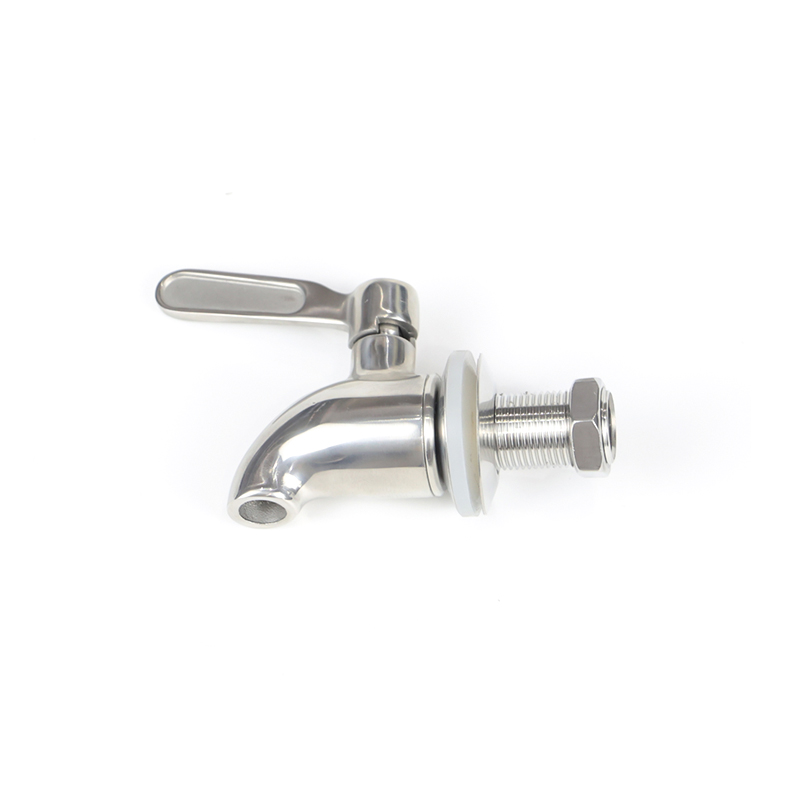
Standard metal drink dispenser taps have an internal bore diameter of approximately 10mm to 12mm. Wide-bore taps — sometimes marketed for juice or sangria dispensers — have openings of 15mm to 20mm. The wider opening allows small fruit pieces and pulp to pass through without obstruction. If you frequently serve beverages with visible fruit content, upgrading to a wide-bore metal tap can reduce clogging incidents by a large margin.
Taps with Built-In Strainer Screens
Some metal drink dispenser taps come with a small internal stainless steel screen just behind the valve. This screen catches debris before it reaches the valve itself, preventing jams while still allowing liquid to flow freely. These taps cost slightly more — typically $15 to $35 compared to $5 to $15 for basic taps — but they pay for themselves after the first large event where a clog is avoided.
Spigot Placement Matters
The position of the tap on the dispenser jar also affects clogging. Taps positioned at the very bottom of the jar are most vulnerable because all sediment and fruit debris naturally settles there. Dispensers with taps positioned 1 to 2 inches above the base leave a buffer zone where heavy debris collects below the tap intake level, reducing blockages considerably. When shopping for a drink dispenser, check where the tap sits relative to the jar base.
Material Quality and Seal Integrity
A poorly sealed metal tap can allow liquid to seep around the valve rather than through it, which pulls small particles into the seal gap and causes sticky buildup that restricts movement over time. Food-grade stainless steel taps with silicone or EPDM rubber gaskets maintain a cleaner seal and are easier to clean. Avoid taps with visible plastic internal components if you plan to use acidic beverages like lemonade or sangria — acid degrades plastic faster, contributing to both taste issues and increased particulate matter in the liquid.
How to Clear a Clog When It Happens
Even with the best preparation, clogs happen. Knowing how to clear one quickly — especially mid-event — is a practical skill worth having.
Quick-Clear Method for Minor Blockages
- Open the tap fully and hold a cup underneath.
- Use a thin straw or cocktail pick to gently probe the tap opening and dislodge the obstruction.
- If liquid is trickling slowly, close the tap, remove it from the dispenser if possible, and rinse under running water.
- Reinstall the tap and test flow before returning the dispenser to service.
Deep-Clean Method for Stubborn Blockages
For a completely blocked metal drink dispenser tap that cannot be cleared in place:
- Drain any remaining liquid from the dispenser.
- Unscrew or pull the tap from the dispenser body.
- Soak the tap in warm water with a small amount of dish soap for 5 to 10 minutes.
- Use a small bottle brush or pipe cleaner to scrub through the interior bore.
- Rinse thoroughly, check that water flows freely through the tap, and reinstall.
For events where this is not practical, having a spare tap already assembled and ready to swap in is the fastest solution. A replacement metal drink dispenser tap typically costs between $8 and $20 and takes less than a minute to install.
Best Fruits and Combinations That Rarely Cause Clogs
Some fruits are naturally better suited for dispensers than others. Choosing low-risk fruits reduces your need for protective measures and makes the whole setup easier to manage.
Low-Risk Fruits for Direct Dispenser Use
- Cucumber rounds: Firm, dense, and slow to break down. Even thin rounds hold their shape for 6 or more hours in cold water.
- Seedless citrus wheels: Lemon, lime, and orange wheels without seeds are relatively safe. The rind holds the piece together even as the fruit softens.
- Pineapple chunks: Firm pineapple pieces cut to 1-inch cubes are excellent in dispensers. They maintain their texture for hours and their size prevents them from reaching most tap openings.
- Apple slices: Green apple slices are crisp and slow to disintegrate. A small amount of lemon juice added to the water prevents browning and keeps them visually appealing.
- Frozen fruit: Using frozen mango, peach, or berry chunks instead of fresh can be a smart strategy. Frozen fruit thaws slowly, maintains its shape longer than fresh, and acts as natural ice to keep the beverage cold.
High-Risk Fruits to Always Contain in a Basket
- Raspberries and blackberries — too small and too soft
- Pomegranate seeds — will jam any standard tap without exception
- Ripe peach slices — disintegrate within 90 minutes in room-temperature water
- Loose herb leaves — shred and pack into tap gaskets
- Seeded watermelon — seeds are the right size to completely block a standard bore tap
Maintenance and Cleaning Practices That Prevent Repeat Clogs
Preventing clogs is not just about what you put into the dispenser — it is also about keeping the dispenser itself clean between uses. Residue from previous batches builds up inside the tap body and creates a narrower effective bore over time, making future clogs more likely even with careful fruit preparation.
After Each Use
- Remove the metal drink dispenser tap completely and rinse under warm running water.
- Use a thin cleaning brush or pipe cleaner to push through the bore and remove any lingering pulp or mineral deposits.
- Allow the tap to air dry completely before reassembling — moisture trapped inside promotes bacterial growth and sticky buildup.
Weekly or After Heavy Use
- Soak the disassembled tap in a solution of one part white vinegar to three parts warm water for 20 to 30 minutes. This dissolves mineral buildup and citric acid residue that regular rinsing does not remove.
- Scrub the gasket and valve seat with a soft brush. The gasket area is where pulp most commonly accumulates unnoticed.
- For stainless steel taps, a brief soak in a diluted food-safe sanitizer solution maintains hygiene standards, particularly important if the dispenser is used commercially or for public events.
A clean tap flows noticeably better than a neglected one, even when both appear visually similar from the outside. The internal bore and valve seat accumulate invisible residue from sugars, pectin, and minerals that incrementally restrict flow and create surfaces where debris catches more easily.
Setup Tips for Events Where Multiple Refills Are Expected
Managing a drink dispenser at a large event is different from casual home use. When a 3-gallon or 5-gallon dispenser needs to be refilled 4 or 5 times throughout the day, you need a system that scales without constant supervision.
- Pre-batch everything the night before. Infuse, strain, and refrigerate your complete liquid supply. On the day of the event, you are only pouring strained liquid into the dispenser — no fruit handling required under pressure.
- Use a single infuser basket for visual garnish only. Fill it with fresh cucumber rounds or citrus wheels — fruits with low breakdown risk — purely for aesthetics. All actual flavor infusion happened overnight during straining.
- Check and clear the tap every 45 to 60 minutes. Even with good preparation, particulates can accumulate in high-traffic situations. A quick visual check and a brief open-and-close of the tap clears minor buildups before they become full blockages.
- Keep a backup tap within reach. For events serving more than 50 guests, having a second clean metal drink dispenser tap stored in a sealed bag allows a 30-second swap if a clog cannot be cleared quickly.
- Position the dispenser at a slight forward tilt. Placing the dispenser on a small wedge or folded towel so it tilts 5 to 10 degrees toward the tap keeps liquid moving toward the exit consistently and prevents debris from settling directly on the tap intake.
Common Mistakes That Lead to Clogged Dispensers
Most clogging problems come down to a few recurring mistakes. Avoiding these alone will eliminate the majority of issues most people encounter with fruit-infused dispensers.
- Adding fruit too early and leaving it too long. Fruit placed in a dispenser more than 3 to 4 hours before serving begins to break down. For best results, add fresh fruit no more than 1 to 2 hours before guests arrive.
- Not removing seeds from citrus. This is the single most preventable cause of metal drink dispenser tap blockages. A citrus seed is approximately 8mm to 10mm long — exactly the right size to jam a standard tap bore.
- Using overripe fruit. Overripe fruit has a much higher water content and breaks down rapidly. Firm, slightly underripe fruit holds its structure far longer in a liquid environment.
- Skipping the tap cleaning between batches. Refilling a dispenser without cleaning the tap first layers new residue on top of old, compounding buildup and reducing flow over successive refills.
- Using carbonated beverages with loose fruit. The carbonation in sparkling water or soda accelerates fruit breakdown by softening cell walls faster than still water. If using carbonated beverages, always contain fruit in a basket — never add it loose.